


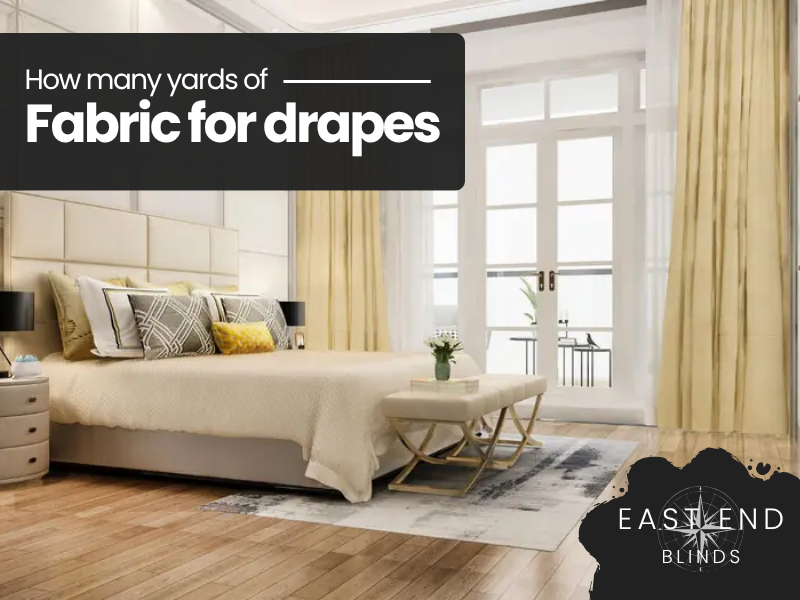
How many yards of fabric for drapes is a planning decision. It determines proportion, coverage, and cost control. Insufficient yardage creates light gaps and irregular folds. Excess yardage inflates budgets without visual return.
This guide focuses on custom window projects that demand precise specifications. We define how many yards of fabric are needed for drapes with clear steps and verified allowances. We address header construction, bottom hems, fabric width, and pattern repeat.
We detail custom size drapes for wide spans. We explain custom length drapes for tall rooms and unusual sill heights. We include customized drapes for bays and corners where alignment matters. Each recommendation links design intent to measured yardage.
East End Blinds provides professional measurement and fabrication support. Our team confirms calculations before ordering. You receive accurate yardage, controlled costs, and refined results.
Measuring Your Windows for Drapes
Begin with precise width and height. Add overlap on both sides for light control and privacy. Measure from the planned rod position to the floor or sill.
Choose floor length, sill length, or a light puddle. Note window casing details and add all allowances before you calculate how many yards of fabric for drapes.
- Measure the finished width plus overlap on both sides for privacy.
- Add two to four inches to each side to improve stackback and coverage.
- Measure the finished length from the rod position to the floor, sill, or puddle point.
- Decide the header style before you finalize measurements.
- Add about three inches for a standard rod pocket.
- Add eight to twelve inches if you plan pleats.
- Add eight to twelve inches for the bottom hem.
- Sum all allowances to get the cut length per panel.
- Record every number clearly to avoid ordering errors.
Factors Affecting Fabric Yardage
These variables decide how many yards of fabric for drapes you need. Plan each factor with care.
Keep notes for custom size drapes and custom length drapes. Confirm choices before you order customized drapes.
Fullness and Style
Fullness controls volume and coverage. Zero percent looks flat and minimal. Fifty percent adds gentle waves. One hundred percent looks rich and tailored. Pleated drapes often use about two times fullness.
- Use higher fullness for formal rooms.
- Use lower fullness for tight budgets.
- Wider windows need more panels with higher fullness.
- Pleat styles increase fabric use.
Panel Guide For A Ten Foot Window Using Single Width Panels
| Fullness level | Panels | Notes |
| Zero percent | Two | Clean lines and minimal folds |
| Fifty percent | Three | Balanced folds and good coverage |
| One hundred percent | Four | Lush folds and a premium look |
Header Style And Hem Allowances
Header construction adds length. Rod pocket headers require extra length above the rod. Pinch pleat or grommet headers need added fabric for structure.
Bottom hems also add length. Plan these allowances before you calculate how many yards of fabric for drapes.
- Add about one inch above the rod for a rod pocket.
- Add eight to twelve inches for pleated headers.
- Add eight to twelve inches for the bottom hem.
- Record each allowance for custom size drapes.
Pattern Repeats
Patterned fabrics include vertical repeats. You must match motifs across panels. Large repeats may require extra length per panel.
Add the repeat to each cut when needed. This protects alignment and finish.
- Confirm the vertical repeat in inches.
- Add up to one full repeat per panel.
- Round up to avoid shortages.
- Keep notes for customized drapes with bold prints.
Fabric Width and Panel Count
Most drapery fabrics come near fifty four inches wide. Finished single width panels measure near fifty inches.
Double width panels provide nearly one hundred inches of coverage. Wider panels reduce seams and can improve flow.
- Choose a single width for narrow spans.
- Choose double width for large spans.
- Increase panel count as the window width grows.
- Verify coverage after fullness is applied.
Lining and Fabric Type
Lining improves light control and drape. Blackout lining blocks light and adds weight. Light filtering lining softens glare.
Lining fabric requires its own yardage. Linen curtains hang softly yet may need careful pressing.
- Add separate yardage for the lining fabric.
- Expect more weight with blackout lining.
- Use light filtering lining for a gentle glow.
- Test hand and fall for custom length drapes.
Tips and Common Pitfalls
- Buy a little extra fabric. Running short costs more later.
- Add one pattern repeat per panel when in doubt.
- Confirm the exact cutting lengths before you order.
- Ask for one continuous length when possible.
- Separate cuts can increase seam work and waste.
- Match patterns across panels for a clean result.
- Assume you lose the repeat when starting a new panel.
- Save surplus fabric for pillows or small accents.
- Repurpose leftovers to protect your budget.
- Use blackout lining where light control matters most.
- Choose light filtering lining for a softer glow.
- Verify fullness and panel count before any purchase.
- Recheck all notes for custom size drapes.
- Reconfirm finished length for custom length drapes.
- Review fabric width and seam placement carefully.
- Round up on how many yards of fabric for drapes.
- Document every step to avoid ordering mistakes.
- Ask a professional to measure and verify numbers.
- Local experts at East End Blinds can confirm yardage.
- Professional support protects schedule and finish quality.
Custom Options and Design Considerations
Custom curtains solve size and proportion problems. Standard sizes often leave gaps or puddles. Custom size drapes and custom length drapes deliver precise coverage.
Unusual openings benefit from professional measurement and verified math. This protects how many yards of fabric for drapes you order.
Custom Versus Standard Sizing
Custom length drapes reach the exact finish line. No cropped edges or awkward breaks. Custom size drapes span wide windows without strain.
DIY formulas can miss hidden allowances. Ask a pro to confirm every number. This ensures accurate yardage and clean installation.
Design Elements and Fabric Behavior
Linen curtains deliver a relaxed and refined fall. Bold stripes demand strict pattern alignment. Plush velvets add weight and depth. Sheers bring softness and daylight.
Each fabric responds differently to fullness and seams. Plan texture and repeat before you cut.
Light Control and Privacy
Blackout lining blocks glare and improves sleep. It adds weight and structure. Light filtering lining maintains a soft glow. It improves privacy without darkening the room. Add separate yardage for the lining fabric. Verify the total before checkout.
Header Style and Appearance
Rod pocket drapes present a gathered and casual look. Pinch pleat drapes create tailored folds with clear rhythm. Grommet headers stack neatly on the rod.
Pleated styles often require more fabric. Confirm the header choice before you finalize how many yards of fabric for drapes.
Panel Width and Composition
Single width panels cover narrow spans with minimal seams. Double width panels improve flow across wide spans. Join panels when needed for large openings.
Balance seam placement with the pattern repeat. Keep the drapery panel layout consistent across the room.
Coordination with Window Treatments
Pair drapes and curtains with shades for layered control. Use sheer panels for daylight with privacy. Add custom window shades for precise glare management.
Coordinate colors and textures for style and function. Map hardware placement before final measurements.
When to Choose Customized Drapes
Select customized drapes for bays and corners. Use them for tall rooms and extra wide glass. Choose them when symmetry and alignment matter.
Confirm panel count and fullness first. Then confirm the header and hems. This sequence secures accurate yardage.
Final Check
List fabric choice and repeat in inches. Record finished widths and lengths. Confirm the lining option and the header type. Recalculate how many yards of fabric for drapes with every change. Save notes for fabrication and installation.
FAQs
How do I calculate how many yards of fabric for drapes?
Measure width and height with allowances. Apply fullness. Convert total inches to yards and round up.
Do I need extra fabric for pattern repeats?
Yes. Add one full vertical repeat per panel to match prints accurately.
What fullness should I choose for a tailored look?
Use about two times fullness for pleated styles. Use lower fullness for simple gathers.
Do custom size drapes use more fabric than ready made?
Often yes. Custom size drapes follow precise widths and hems that raise yardage.
How does blackout lining change how many yards of fabric for drapes?
It adds separate lining yardage. Expect more weight and stronger folds.
Do rod pocket and pinch pleat need different yardage for custom length drapes?
Yes. Rod pockets add small top allowances. Pinch pleats require extra fabric for structure.
Can you measure and confirm customized drapes in Suffolk and Nassau?
Yes. East End Blinds measures, verifies yardage, and fabricates customized drapes locally.
Plan Your Custom Size Drapes With Us
Accurate math protects design, coverage, and budget. Measure with care and confirm every allowance. Verify how many yards of fabric for drapes before you buy.
Contact East End Blinds for expert support in Suffolk and Nassau. Our team measures, calculates, and installs with precision. We handle custom size drapes, custom length drapes, and lining plans.
Schedule a free in home measure today. Plan well and order enough fabric for beautifully tailored drapes.