



Not all windows are standard-sized, and not all measuring instructions are one-size-fits-all. From dramatic arched windows to floor-to-ceiling glass and expansive sliding doors, many homes feature unique architectural windows that require a more thoughtful approach. Knowing how to measure for drapes in these situations ensures that your window treatments not only look great but also function properly.
This guide breaks down what makes measuring for drapes different for custom-sized windows and provides layout-specific tips to ensure accuracy.
Why You Need Special Considerations for Odd-Shaped Windows
When it comes to oversized or unconventional window designs, standard curtain panels and rods simply won’t cut it. These windows often serve as architectural focal points, which means your drapery needs to fit precisely and enhance the room’s overall style.
Common examples of unique window types:
- Arched and eyebrow windows
- Bay and bow windows
- Corner or wraparound windows
- Sliding glass doors with side panels
- Floor-to-ceiling windows
- Trapezoid, triangular, or angled windows
Each of these window styles presents unique challenges that require careful measurement and design planning.
Tools You’ll Need to Start Measuring
Accurate measurements are crucial for achieving a well-fitted drapery, particularly for custom projects. Here’s a checklist of tools you’ll want to have before you begin.
Measuring Essentials Checklist:
- Steel measuring tape (avoid flexible cloth ones)
- Step ladder for tall windows
- Pencil and notebook, or worksheet
- Level to ensure straight rod placement
- Optional: laser measurer for hard-to-reach windows
- Camera or phone to photograph windows (helpful for consultations)
Write down every measurement clearly, and measure twice for accuracy. Always record dimensions in inches and round to the nearest 1/8 inch.
How to Measure for Drapes on Oversized Windows
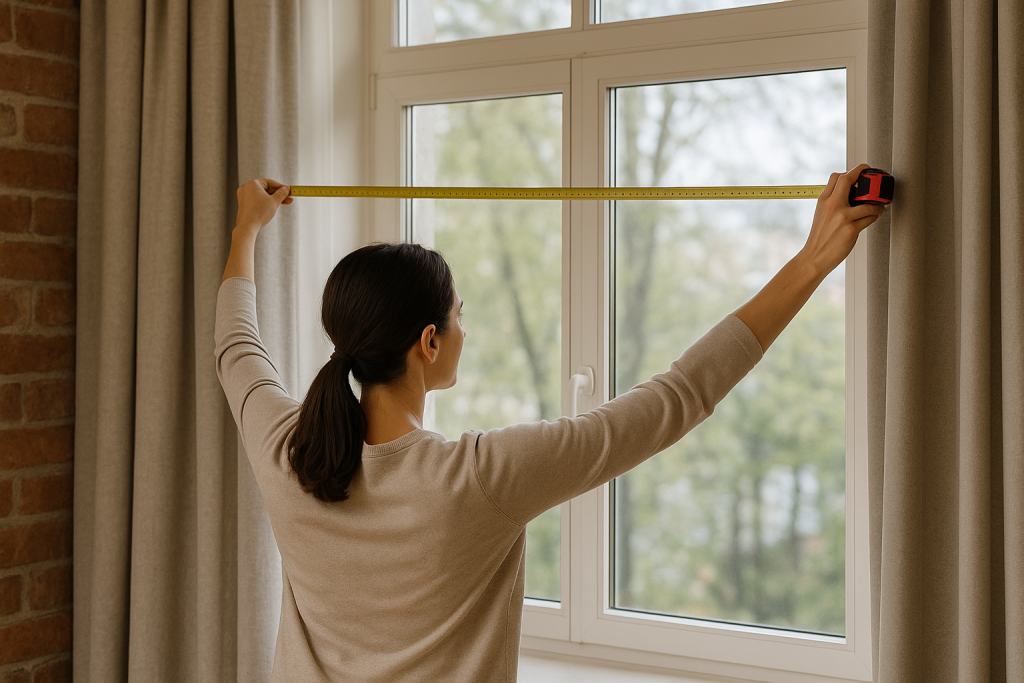
Oversized windows require a wider span of coverage and sometimes extra-long drapes. This is common in modern living rooms, entryways, or loft-style homes.
Step-by-step approach:
- Measure the full width of the window, including any trim or casing.
- Determine how high above the window you want the rod placed. A good rule of thumb is 6 to 12 inches above the frame to draw the eye upward.
- Multiply the window width by 1.5 to 2 times to account for proper drape fullness.
- Measure from your desired rod placement down to where you want the drapes to fall (either floor-length or puddled).
- Add extra inches if you want the drapes to break or puddle on the floor.
Oversized windows benefit greatly from custom drapery to ensure the fabric hangs evenly and glides smoothly when opened or closed.
Measuring for Drapes on Arched or Eyebrow Windows
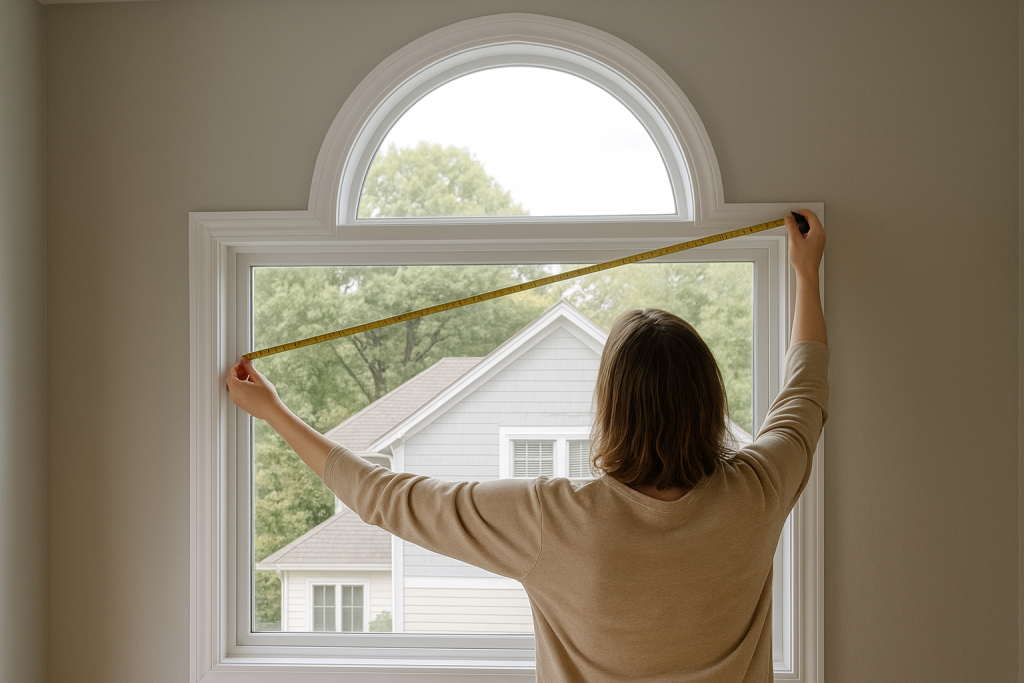
Arched windows offer a classic and elegant touch, but figuring out how to measure for drapes around them can be tricky. Your goal should be to either accentuate the shape or create a clean rectangular frame that simplifies the design.
Tips for measuring:
- Measure the width of the window at its base (widest point)
- Measure the height from the base to the peak of the arch
- If using a straight rod above the arch, measure from the rod placement to the desired length
- If preserving the arch shape, consider stationary panels on each side
| Arched Window Type | Mounting Method | Suggested Drapery Style |
| Full arch | Rod above the arch | Floor-length panels |
| Eyebrow arch | Inside frame mount | Roman shades or side panels |
| Half-moon window | Flexible rod (custom) | Custom ripple fold or sheers |
How to Measure for Drapes on Corner and Bay Windows
Bay and corner windows have multiple panels and angles, which makes measuring a little more complex.
Key measurements:
- Measure each section (left, center, and right)
- Record both the width and height of each panel
- Include the space between each section for rod brackets
- Add extra inches for overlap to prevent light gaps
- Note obstructions like furniture, molding, or radiators that may affect mounting
Using custom rods or bay window rods is often the best solution, as they’re designed to fit angled layouts perfectly.
Measuring for Drapes on Sliding Doors or Wall-to-Wall Glass
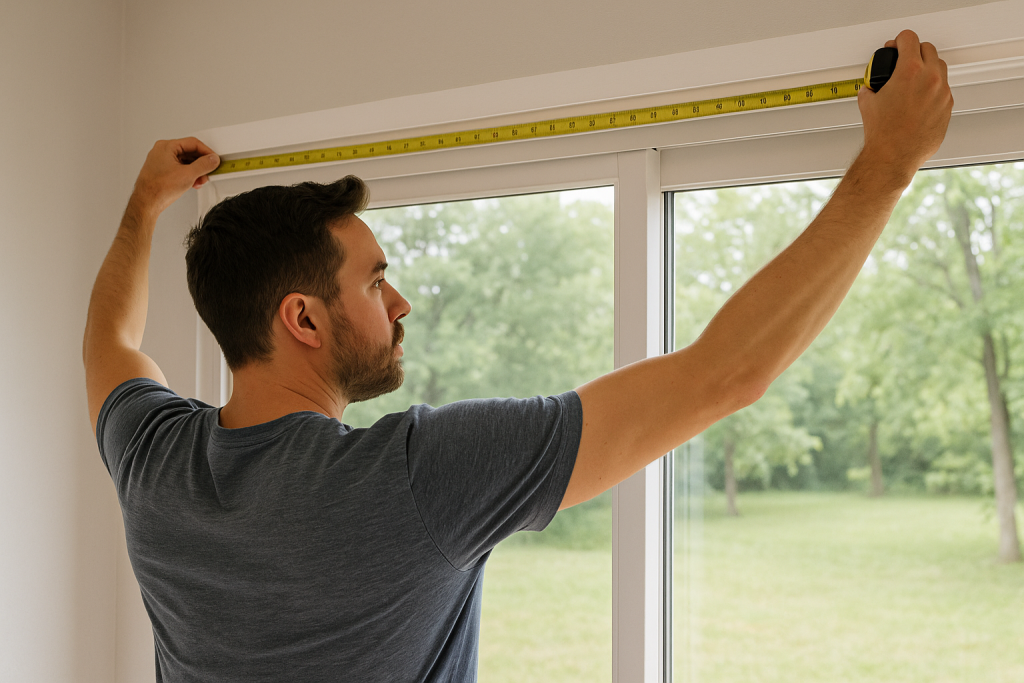
If your living room or dining space includes a sliding glass door or full glass wall, your drapes must cover the width and move easily across the span.
What to measure:
- Full width of the glass area plus several inches on each side (for stack-back)
- Desired height from the rod or the ceiling to the floor
- Consider floor clearance if you prefer drapes to skim or puddle
- Always allow for clear door access when drapes are open
For smooth functionality, opt for ceiling-mounted tracks and lightweight or ripple fold styles.
How to Choose the Right Drapery Mount for Your Window Type
Mounting your drapes the right way is just as important as measuring them correctly. The mounting style you choose affects both the appearance and function of your window treatments.
| Mount Type | Description | Best For |
| Inside mount | Rod or track installed in the frame | Clean, minimalist looks |
| Outside mount | Mounted on the wall above the window | Tall ceilings, full light blocking |
| Ceiling mount | Track installed on the ceiling surface | Floor-to-ceiling and arched windows |
| Bay window rod | Angled rod fits the window contour | Bay and bow windows |
Why Custom Drapery Is Ideal for Non-Standard Windows
When dealing with odd shapes or oversized dimensions, custom drapery is often the only way to ensure a precise and functional fit.
Benefits of custom drapery:
- Exact length and width for each unique window
- Enhanced fullness, proper pleats, and clean stacking
- Professional fabric selection and lining options
- Perfect for corner, angled, or floor-to-ceiling windows
- Adds value, comfort, and style to any room
Working with professionals ensures that all your measurements are accurate and your drapery performs well over time.
Common Measuring Mistakes to Avoid
Even a small measuring error can lead to poorly fitted or non-functional drapes. Here are the most frequent mistakes homeowners make.
Mistakes to watch for:
- Only measuring the glass area and ignoring trim or casing
- Forgetting to account for rod height and bracket width
- Not allowing extra width for drape stacking or fullness
- Measuring once instead of double-checking
- Choosing a mount style after measuring (should be done beforehand)
Take the time to get it right or consult a pro for extra support.
Let East End Blinds Handle the Measuring for You
Measuring for drapes on oversized or uniquely shaped windows doesn’t have to be stressful. At East End Blinds, we make the process easy with professional guidance, custom-fit solutions, and personalized in-home consultations. Whether you’re tackling arched windows, bay layouts, or a full wall of glass, our team ensures your drapes look flawless and function perfectly. Contact us today to schedule your free consultation and get started with window treatments that fit right the first time.