





Window blinds are a practical and stylish addition to any home, but like all household fixtures, they can experience wear and tear over time. From slats that won’t tilt to blinds that refuse to roll up, these issues are not only frustrating—they can also interfere with your home’s privacy and light control.
Fortunately, you don’t always need to replace your blinds when problems arise. In this guide, we’ll walk you through how to Fix Window Blinds problems using tools you may already have at home. This not only saves you money but also extends the lifespan of your existing blinds.
Tools You’ll Need for DIY Blind Repairs
Before diving into repairs, make sure you have the right tools. While you may not need all of these for every repair, having them on hand will make the process smoother:
- Screwdriver (flathead and Phillips)
- Needle-nose pliers
- Replacement cords
- Tilt mechanism parts (for some models)
- Super glue or slat repair tape
- Step ladder
- Scissors
- Small hammer (optional)
These basic tools are typically enough to resolve most functional issues with horizontal blinds, vertical blinds, and roller shades.
How to Fix Blinds That Won’t Go Up or Down
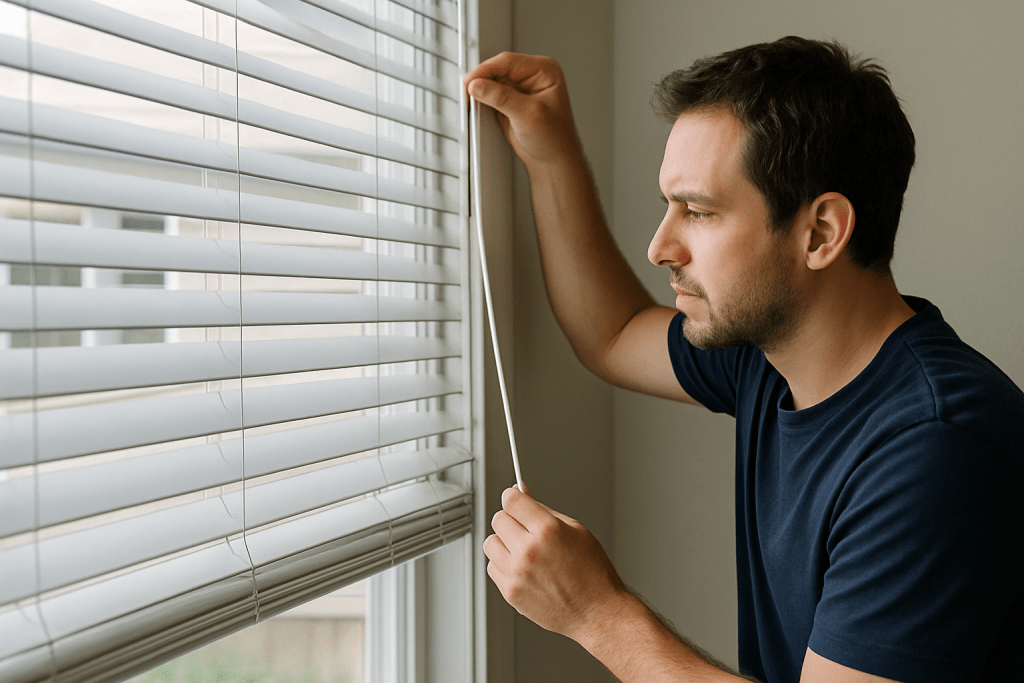
This is one of the most frequent issues homeowners face, particularly with Venetian and mini blinds.
Problem: The Blinds Are Stuck in Place
In many cases, the internal mechanism—known as the “cord lock” or “clutch”—is jammed.
Solution:
- Fully lower the blinds by pulling the cord down.
- Tilt the bottom rail to loosen the tension.
- Gently tug the cord to release the lock mechanism.
- If this doesn’t work, open the headrail and inspect the cord lock or spring mechanism for signs of damage or tangling.
Problem: The Blinds Roll Up Unevenly
This often occurs with roller shades or cordless blinds.
Solution:
- Roll the blind up and then unroll it completely.
- Repeat several times to re-tension the internal spring.
- If the roller still won’t catch, the spring may need to be replaced.
How to Fix Slats That Won’t Tilt Properly
If your blinds won’t tilt open or closed, the issue likely lies with the tilt mechanism or tilt rod.
Common Causes:
- Broken or misaligned gear in the tilt mechanism
- Detached tilt rod
- Worn-out wand or chain
Steps to Fix:
- Remove the blind from the window.
- Open the headrail and inspect the tilt mechanism.
- If the gear is broken, replace the mechanism (available at most hardware stores).
- Ensure the tilt rod is securely inserted into the gear.
If you have a wand-controlled blind, ensure the wand is not cracked or loose at the attachment point.
How to Fix Bent or Broken Slats
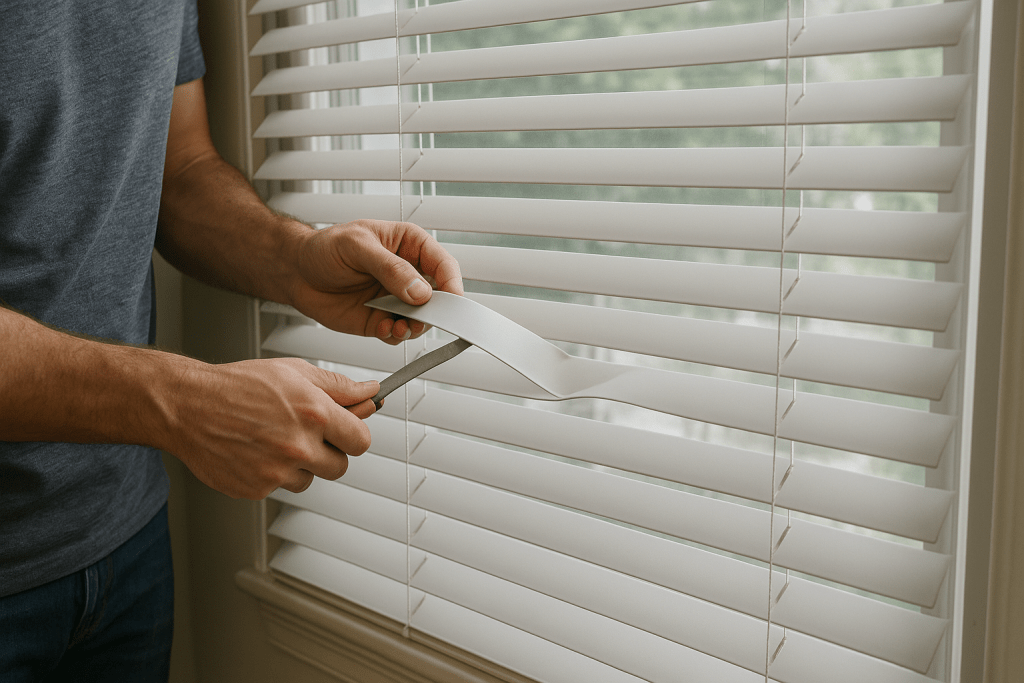
Damaged slats can occur due to accidents, pets, or excessive force. If the damage is limited to one or two slats, you don’t need to replace the entire blind.
To Fix Vinyl or Aluminum Slats:
- Use a blow dryer on low heat to soften the bent area.
- Gently press the slat between two flat surfaces until it returns to shape.
- For minor cracks, use clear repair tape.
To Fix Wood or Faux Wood Slats:
- Remove the damaged slat by undoing the ladder cords.
- Slide in a new matching slat.
- Tie the cords securely to hold everything in place.
When Should You Replace Instead of Repairing?
While many issues can be easily fixed at home, there are cases where a full replacement is the better option. Here’s a breakdown to help you decide:
| Problem | Recommendation |
| One or two slats are bent or misaligned | Repair |
| Cords are tangled or fraying | Repair |
| The style is outdated or doesn’t match the decor | Repair |
| Multiple slats are damaged | Replace |
| Blinds are faded, discolored, or warped | Replace |
| The style is outdated or doesn’t match decor | Replace |
As a general rule, if repairs would cost more than 50% of a new blind, or if the blind is over 10 years old, replacement may be more economical in the long run.
Maintenance Tips to Prevent Blind Damage
To avoid frequent repairs, consider adding a few simple steps to your home maintenance routine.
1. Dust Regularly: Use a microfiber cloth or duster to keep dirt from building up, which can lead to wear and tear on moving parts.
2. Avoid Excessive Force: Operate cords and wands gently. Forcing them can strip gears or damage the cord lock.
3. Inspect Monthly: Look for signs of fraying cords, loose brackets, or bent slats. Early detection helps you fix small problems before they become major issues.
4. Child Safety: If you have young children or pets, consider switching to cordless blinds or using cord cleats to secure loose strings.
Ready to Upgrade or Need Expert Help? Let East End Blinds Handle It
Tired of dealing with broken blinds that just won’t work right? Whether you’ve tried fixing them yourself or are ready for a fresh start, East End Blinds has the perfect solution. From modern, low-maintenance options to timeless designs that elevate any room, our expert team is here to help you find window treatments that fit your style, function, and budget. Ready to get started? Contact us today and let us help you upgrade your home with beautiful, hassle-free blinds.